Skip to content
Foundation for music promotion

Change at the helm of FONDATION SUISA

Change at the helm of FONDATION SUISA
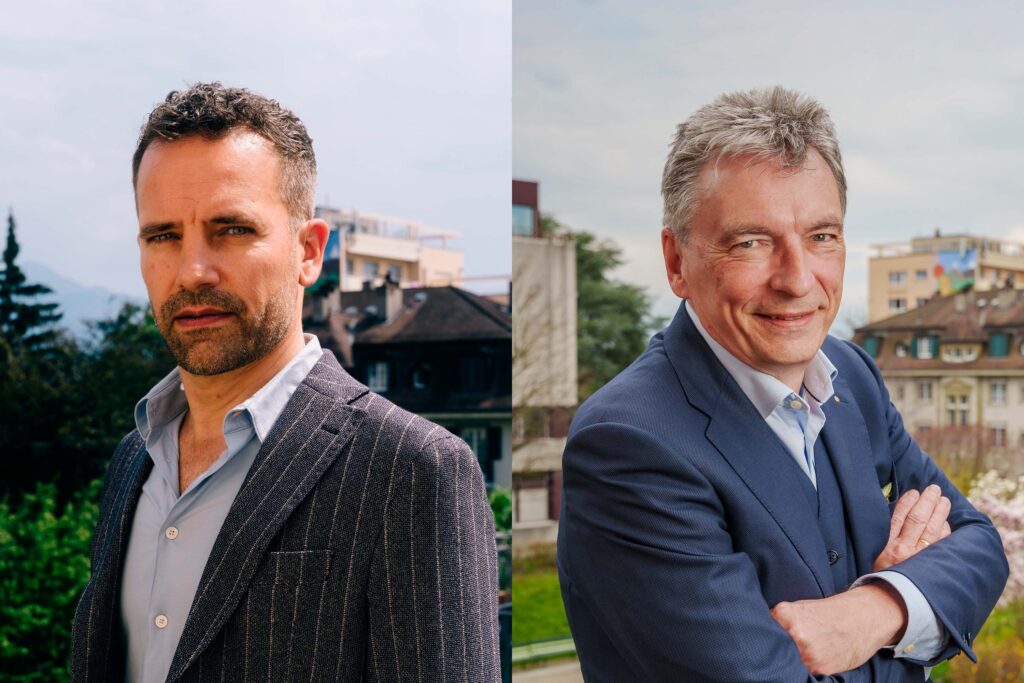
Fabio Baechtold (left) is taking over from Urs Schnell (right) as Director of FONDATION SUISA.
Photos: Mattia Coda
Interviews and text by Zeno Gabaglio, President of the Foundation Board of FONDATION SUISA.
SUISA’s foundation for the promotion of music has a new Director: Fabio Baechtold, himself a member of SUISA, succeeded Urs Schnell on 1 July 2026. Urs Schnell has been at the helm of FONDATION SUISA since 2008 and is retiring at the end of September 2026.

In Switzerland, you come of age when you turn eighteen. And even if FONDATION SUISA has existed since 1989, for the last eighteen years a single Director has been at the helm and has successfully, if I may say, steered the course to full maturity.

Without diminishing the work of his predecessor, between 2008 and today, the changes in the worlds of culture and musical creation have been so numerous and far-reaching that, without the attentive and meticulous husbandry of Urs Schnell, the Fondation would not be the sound, revitalised institution he is passing on to us today: an institution ready to reinterpret its own mission with the responsibility and awareness characteristic of adulthood.

The members who attended SUISA’s General Meeting in Zurich on 23 June last, a few months before Urs Schnell’s retirement, already had the opportunity to say goodbye and thank him, and also to meet Fabio Baechtold, the person chosen by the Foundation Board as his successor. Without any further ceremony, I would like to share a few exchanges I had with Urs and Fabio in order to outline certain aspects of the roadmap that FONDATION SUISA is following.

Retrospective with Urs Schnell

When you look back on your work for Fondation SUISA, what are you most proud of?
Urs Schnell: One of the most important achievements was consolidating Fondation SUISA as a reliable and authoritative partner, both in the musical landscape and in Switzerland’s cultural policy. Thanks to our sound and stable organisation, we managed to secure the continuity of our activities and make an effective impact: today, many other institutions look to our work as a reference, and benchmark their positions against ours. I am especially proud of “Get Going!”, the support programme that we managed to implement – starting in 2018 – outside conventional cultural funding practice which is usually geared to the end product. “Get Going!” on the other hand was directed at the process of musical creation, involved greater risk and pursued an open-ended approach in terms of results. We thus fostered avenues for growth and research which would probably never have been developed within the confines of a conventional project. Knowing that this model has been at least partially adopted by other institutions gives me great satisfaction.

Is there anything you would have liked to achieve but did not manage to bring to fruition?
Generally speaking, I would have liked to launch an in-depth reflection on a re-thinking of the music and culture support system. The pandemic starkly exposed both the fragility and limits of existing funding systems and the lack of co-ordination between public and private entities working in the same sphere.
Unfortunately, once the emergency was over, people quickly reverted to the same logic as before without any systemic review. Those past lessons did not trigger structural changes, and the negative effects of certain mechanisms are becoming increasingly evident today, including in economic terms.
With specific regard to contents, on the other hand, I would have liked to devote more time to Switzerland’s musical heritage. We made some achievement with the rediscovery of the works of Joseph Lauber, Robert Oboussier and other extraordinary composers. Our purpose was not merely to restore the archives but to bring this music back to concert life, recognising it as living cultural heritage and a source of inspiration for contemporary musical creation. However, these achievements owe more to the passion and dedication of single individuals than to any co-ordinated strategy.
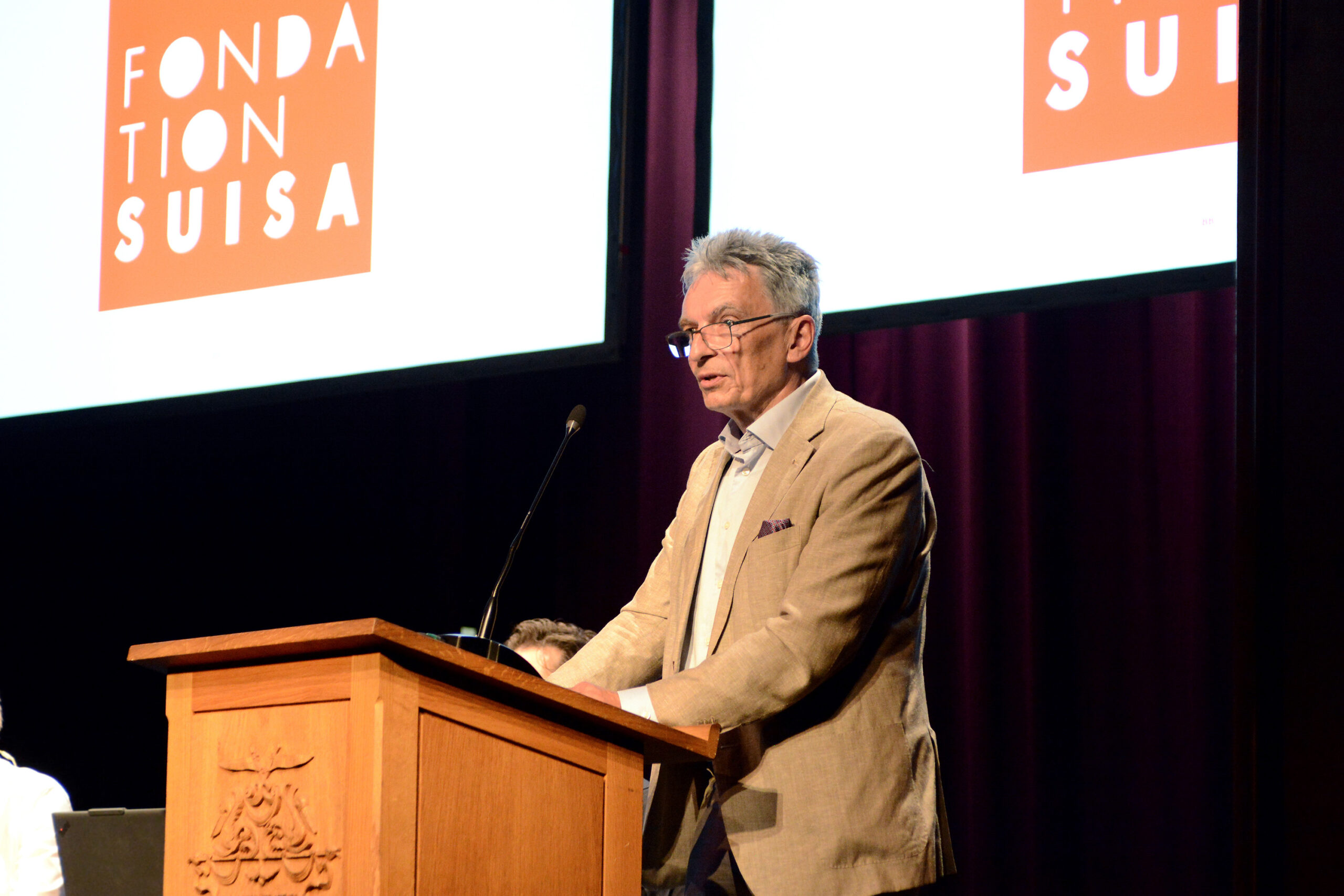
Urs Schnell steht an einem Rednerpult und spricht zum Publikum.
Urs Schnell making his goodbye speech at SUISA’s General Assembly on 23 June 2026, at the Kaufleuten, Zurich. (Photo: Manu Leuenberger)

What are your hopes for the future of FONDATION SUISA?
I think FONDATION SUISA will inevitably have to set its own priorities with greater accuracy. Paradoxically, what for years was our greatest strength, i.e. supporting musical creation in its broadest variety, without distinction of genre or style, now risks becoming a limit. We are receiving more and more funding requests, and are the target of increasingly diverse, not to say conflicting, expectations. Under the circumstances, it is ever more difficult to define strategic priorities and make a truly significant impact. Some fifteen years ago, for example, we were pioneers in recognising film music as a strategic development target. Today it would be merely one among many themes to be addressed. I truly hope, therefore, that rather than all following the same aims, cultural promotion institutions manage to diversify the forms of cooperation and co-ordination, and develop complementary instead of overlapping strategies.

Outlook with Fabio Baechtold

What is the biggest challenge in going from an activity focused on a single genre – like jazz in your previous work for BeJazz and Suisse Diagonales – to a role encompassing the entire spectrum of Swiss musical creation?
Fabio Baechtold: When you fully master a genre, you instinctively recognise the truly significant projects and artists. It will no doubt take me more time to do so in fields I know less well. However, the experience I garnered with the Music Commission of the City of Bern taught me that you can adjust to new contexts much faster than you think. My views on contemporary music and pop music have often coincided with those of the experts, and this experience gives me confidence.
And with regard to the assessment of funding requests, I can also rely on the competencies of the FONDATION SUISA Artistic Committee. I see my role more as maintaining an overview, defining strategic guidelines, and developing new approaches. And it may actually be an advantage in this respect to see things from an external perspective.

Looking to the future, what do you think will be the main challenges for Swiss musical creation?
The number of funding requests received by cultural funding institutions is rising constantly as is the number of applications to concert organisers. At the same time, certain – so far less well-structured – sectors are rightly demanding more adequate compensation. All this means that we shall have to define our priorities and intervention profile even more clearly, otherwise the system may no longer be sustainable. Swiss musicians, moreover, have to cope with a structural problem, namely the limited size of their domestic market. With the decline of the record industry, concerts have become an even more important source of income. But the opportunities to perform in Switzerland are inevitably limited and, when you come from a small fragmented country like ours, making an international break-through is a huge challenge.
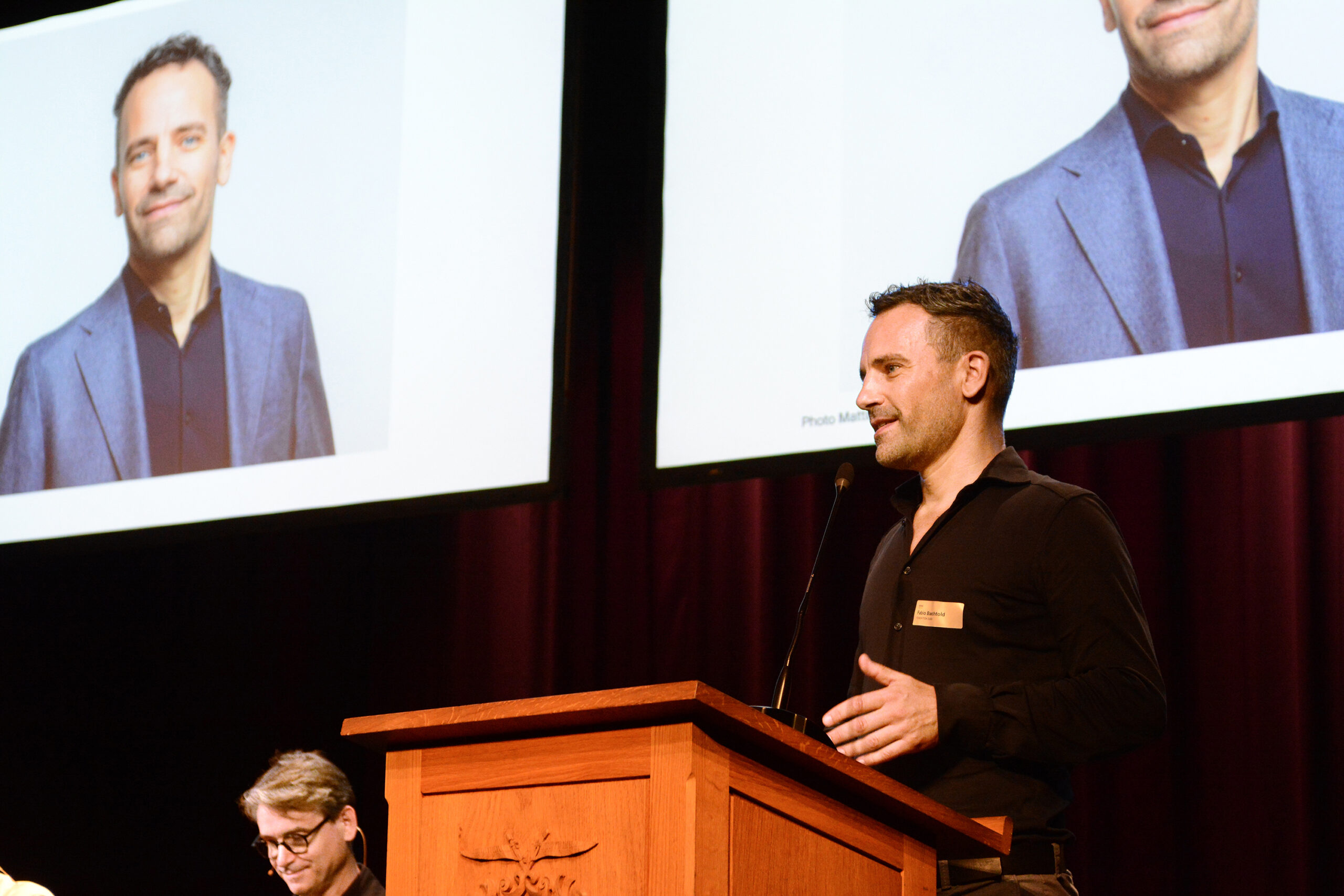
Fabio Baechtold hält eine Ansprache auf der Bühne.
Fabio Baechtold, the new Director of FONDATION SUISA, introduces himself to SUISA members at the 2026 General Meeting. (Photo: Manu Leuenberger)

What do you like most about working with music and in close contact with artists?
Musicians are profoundly creative individuals; this is not a routine job. Working in so passionate an environment is a constant source of motivation. Moreover, the feedback is always immediate: you understand right away what works and what needs to be improved instead.

Many people think that artists – and musicians in particular – are not normal people. Is that true?
Many artists choose to live without any proper safety nets, because they experience their art as an essential need. This is certainly a trait peculiar to their work, but I wouldn’t call it ‘abnormal’ at all. I believe real life is far richer and more variegated than the stereotypes. If there is one feature common to cultural workers, it may be precisely the extraordinary diversity of personalities and life stories. And that is what makes working with them so stimulating.

www.fondation-suisa.ch

Fondazione per la promozione della musica

Cambio alla direzione di FONDATION SUISA

Change at the helm of FONDATION SUISA
Fabio Baechtold (a sinistra) assume la carica di direttore di FONDATION SUISA, succedendo a Urs Schnell (a destra).
Fotos: Mattia Coda
Interviste e testo di Zeno Gabaglio, presidente del Consiglio di fondazione FONDATION SUISA
La fondazione per la promozione della musica di SUISA ha un nuovo direttore: Fabio Baechtold, a sua volta membro di SUISA, è subentrato a Urs Schnell il primo luglio 2026. Urs Schnell dirigeva FONDATION SUISA dal 2008 e andrà in pensione alla fine di settembre 2026.

In Svizzera la maggiore età si raggiunge al compimento dei diciotto anni. E se anche FONDATION SUISA esiste dal 1989, negli ultimi diciotto anni è stata accompagnata da un unico direttore che, mi permetto di dire, ne ha realizzato pienamente la maturità.

Non si tratta di svalutare il lavoro del suo predecessore, ma dal 2008 a oggi i cambiamenti nel mondo della creazione musicale e della cultura sono stati così numerosi e così profondi che soltanto il lavoro curioso e attento di Urs Schnell ha potuto consegnarci oggi una fondazione sana, rinnovata e pronta a reinterpretare nuovamente il proprio scopo. Con la responsabilità e la consapevolezza tipici della maggiore età.

I membri SUISA presenti all’assemblea generale dello scorso 23 giugno a Zurigo hanno già avuto occasione di salutare e ringraziare Urs Schnell, a pochi mesi dal suo prossimo pensionamento, e di conoscere Fabio Baechtold: la persona scelta dal consiglio di fondazione come suo successore. Non voglio aggiungere qui ulteriori parole cerimoniose, ma mi permetto di riportare qualche scambio con Urs e con Fabio, per delineare alcuni elementi del percorso che la FONDATION SUISA sta seguendo.

Uno sguardo al passato con Urs Schnell

Di cosa vai più fiero del lavoro svolto alla FONDATION SUISA?
Urs Schnell: Uno dei risultati più importanti è stato consolidare la FONDATION SUISA come un partner affidabile e autorevole, tanto nel panorama musicale quanto in quello della politica culturale svizzera. Grazie a strutture solide e stabili abbiamo potuto garantire continuità alle nostre attività e produrre un impatto concreto: oggi molte altre istituzioni guardano al nostro operato come a un punto di riferimento e si confrontano con le nostre posizioni. Sono inoltre particolarmente orgoglioso di «Get Going!», il programma di sostegno che – già dal 2018 – siamo riusciti a realizzare fuori dalle tradizionali logiche del finanziamento culturale, normalmente orientate al prodotto finale. Con «Get Going!» ci siamo invece rivolti al processo della creazione musicale, assumendoci un rischio maggiore e mantenendo un approccio aperto rispetto ai risultati. Così abbiamo favorito percorsi di crescita e di ricerca che – probabilmente, entro i confini di un progetto convenzionale – non si sarebbero mai sviluppati. Sapere che questo modello, almeno in parte, è stato ripreso anche da altre istituzioni è per me motivo di grande soddisfazione.

C’è qualcosa che avresti voluto realizzare e che invece non sei riuscito a portare a termine?
Su un piano generale, mi sarebbe piaciuto aprire una riflessione di fondo su come il sistema del sostegno alla musica e alla cultura debba essere ripensato. La pandemia ha messo in luce con grande evidenza sia i limiti e la fragilità delle strutture di finanziamento esistenti, sia la mancanza di coordinamento tra gli enti pubblici e le organizzazioni private che operano nello stesso ambito.
Purtroppo, una volta superata l’emergenza, si è tornati rapidamente alla stessa logica di prima, senza una vera revisione sistemica. Da quelle lezioni non sono scaturiti cambiamenti strutturali e oggi iniziamo a vedere sempre più chiaramente gli effetti negativi di certi meccanismi, anche dal punto di vista economico.
Dal punto di vista dei contenuti, invece, avrei voluto dedicare maggiore attenzione al patrimonio musicale svizzero. In parte ci siamo riusciti, con la riscoperta di opere di Joseph Lauber, Robert Oboussier e di altri straordinari compositori. Non si è trattato di un recupero puramente archivistico, ma di restituire queste musiche alla vita concertistica, riconoscendole come un patrimonio culturale vivo e come una fonte di ispirazione per la creazione musicale contemporanea. Questi risultati, tuttavia, sono nati più dall’impegno e dalla passione di singole persone che non da una strategia coordinata.

Urs Schnell steht an einem Rednerpult und spricht zum Publikum.
Urs Schnell durante il suo discorso di commiato all’Assemblea generale di SUISA del 23 giugno 2026 al Kaufleuten di Zurigo. (Foto: Manu Leuenberger)

Che cosa ti auguri per il futuro della FONDATION SUISA?
Credo che la FONDATION SUISA dovrà inevitabilmente definire con maggiore precisione le proprie priorità. Paradossalmente, quella che per molti anni è stata la nostra principale forza — sostenere la creazione musicale nella sua più ampia varietà, senza distinzioni di genere o di stile — rischia oggi di diventare un limite. Riceviamo un numero sempre maggiore di richieste e su di noi convergono aspettative molto diverse, talvolta persino contrastanti. In queste condizioni diventa sempre più difficile definire priorità strategiche e produrre un impatto realmente significativo. Circa quindici anni fa, per esempio, abbiamo avuto un ruolo pionieristico nel riconoscere la musica per il cinema come un ambito strategico di sviluppo. Oggi, invece, sarebbe soltanto uno dei tanti temi di cui occuparsi. Mi auguro quindi che, invece di perseguire tutti i medesimi obiettivi, gli enti di promozione culturale riescano a costruire maggiori forme di collaborazione e coordinamento, sviluppando strategie complementari piuttosto che sovrapposte.

Uno sguardo al futuro con Fabio Baechtold

Qual è l’aspetto più difficile nel passare da un’attività concentrata su un genere specifico – come il jazz nel tuo precedente lavoro per BeJazz e per Suisse Diagonales – a un ruolo che deve abbracciare tutte le forme della creazione musicale svizzera?
Fabio Baechtold: Quando si conosce a fondo un genere, si riconoscono quasi d’istinto i progetti e gli artisti davvero significativi. Negli ambiti che conosco meno avrò sicuramente bisogno di un po’ di tempo in più. Tuttavia, l’esperienza maturata nella Commissione musicale della Città di Berna mi ha insegnato che ci si può orientare in nuovi contesti molto più rapidamente di quanto si immagini. È capitato spesso che le mie valutazioni sulla musica contemporanea o sul pop coincidessero con quelle degli specialisti, e questa esperienza mi dà fiducia.
Per quanto riguarda la valutazione delle domande di sostegno, posso inoltre contare sulla competenza della Commissione artistica della FONDATION SUISA. Il mio compito è piuttosto quello di mantenere uno sguardo d’insieme, definire le linee strategiche e sviluppare nuovi approcci. E, sotto questo aspetto, osservare una scena anche da una prospettiva esterna può rivelarsi un vantaggio.

Guardando al futuro, quali saranno secondo te le principali sfide per la creazione musicale svizzera?
Il numero delle richieste di sostegno continua a crescere in tutte le istituzioni che si occupano di finanziamento culturale, così come aumentano le candidature che ricevono gli organizzatori di concerti. Allo stesso tempo, in alcuni settori – finora meno strutturati – si rivendicano giustamente compensi più adeguati. Tutto questo significa che dovremo definire con ancora maggiore chiarezza le nostre priorità e il nostro profilo di intervento: altrimenti il sistema rischia di non essere più sostenibile. Per i musicisti svizzeri resta poi un problema strutturale: la dimensione ridotta del mercato interno. Da quando il mercato discografico è entrato in crisi, i concerti sono diventati una fonte di reddito ancora più importante. Ma le occasioni per esibirsi in Svizzera sono inevitabilmente limitate e, partendo da un Paese piccolo e frammentato come il nostro, riuscire ad affermarsi all’estero rappresenta una sfida particolarmente complessa.

Fabio Baechtold hält eine Ansprache auf der Bühne.
Il nuovo direttore della fondazione per la promozione della musica, Fabio Baechtold, si è presentato per la prima volta ai membri di SUISA in occasione dell’Assemblea generale 2026. (Foto: Manu Leuenberger)

Che cosa ti piace di più del lavorare con la musica e a contatto con gli artisti?
I musicisti sono persone profondamente creative: nessuno fa questo mestiere per semplice routine. Lavorare in un ambiente così appassionato è una fonte di motivazione continua. Inoltre, il riscontro è sempre molto diretto: si percepisce subito ciò che funziona e ciò che, invece, ha bisogno di essere migliorato.

Molti pensano che chi fa arte – e in particolare musica – non sia una persona «normale». È davvero così?
Molti artisti scelgono di vivere senza particolari reti di sicurezza, perché sentono la propria arte come una necessità profonda. Questo è certamente un tratto peculiare del loro lavoro, ma non lo definirei affatto qualcosa di «anormale». Credo piuttosto che la realtà sia molto più ricca e sfaccettata degli stereotipi. Se c’è una caratteristica che accomuna chi lavora nella cultura, è forse proprio questa straordinaria varietà di personalità e di percorsi. Ed è anche ciò che rende così stimolante lavorare insieme a loro.

www.fondation-suisa.ch

Leave a Reply

All comments will be moderated. This may take some time and we reserve the right not to publish comments that contradict the conditions of use.

Your email address will not be published.