In Switzerland, you come of age when you turn eighteen. And even if FONDATION SUISA has existed since 1989, for the last eighteen years a single Director has been at the helm and has successfully, if I may say, steered the course to full maturity.
Without diminishing the work of his predecessor, between 2008 and today, the changes in the worlds of culture and musical creation have been so numerous and far-reaching that, without the attentive and meticulous husbandry of Urs Schnell, the Fondation would not be the sound, revitalised institution he is passing on to us today: an institution ready to reinterpret its own mission with the responsibility and awareness characteristic of adulthood.
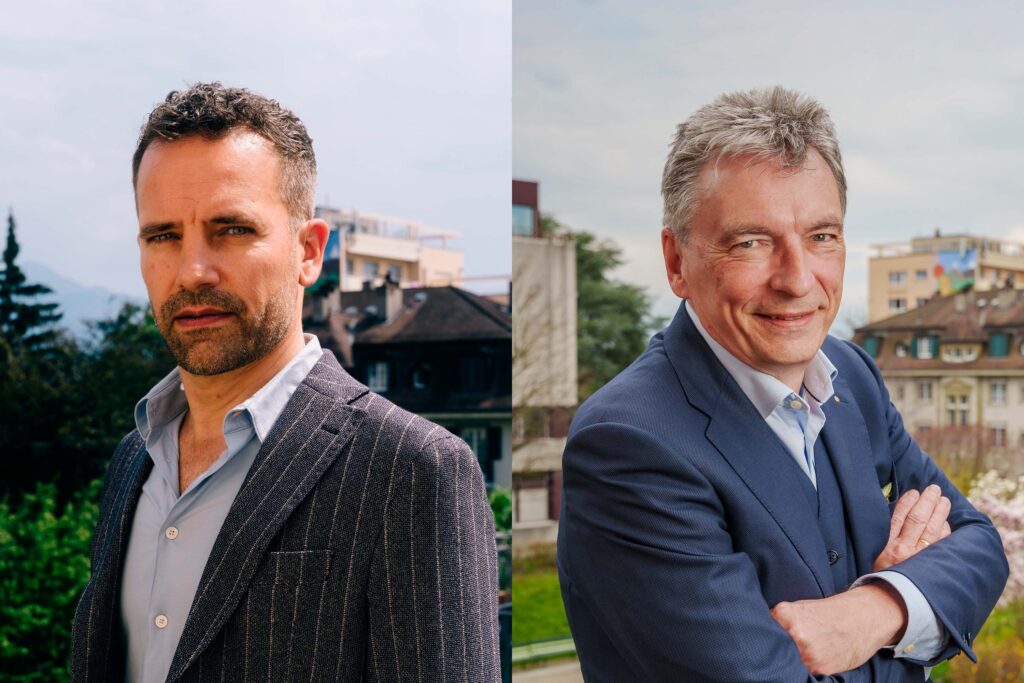
The members who attended SUISA’s General Meeting in Zurich on 23 June last, a few months before Urs Schnell’s retirement, already had the opportunity to say goodbye and thank him, and also to meet Fabio Baechtold, the person chosen by the Foundation Board as his successor. Without any further ceremony, I would like to share a few exchanges I had with Urs and Fabio in order to outline certain aspects of the roadmap that FONDATION SUISA is following.
Retrospective with Urs Schnell
When you look back on your work for Fondation SUISA, what are you most proud of?
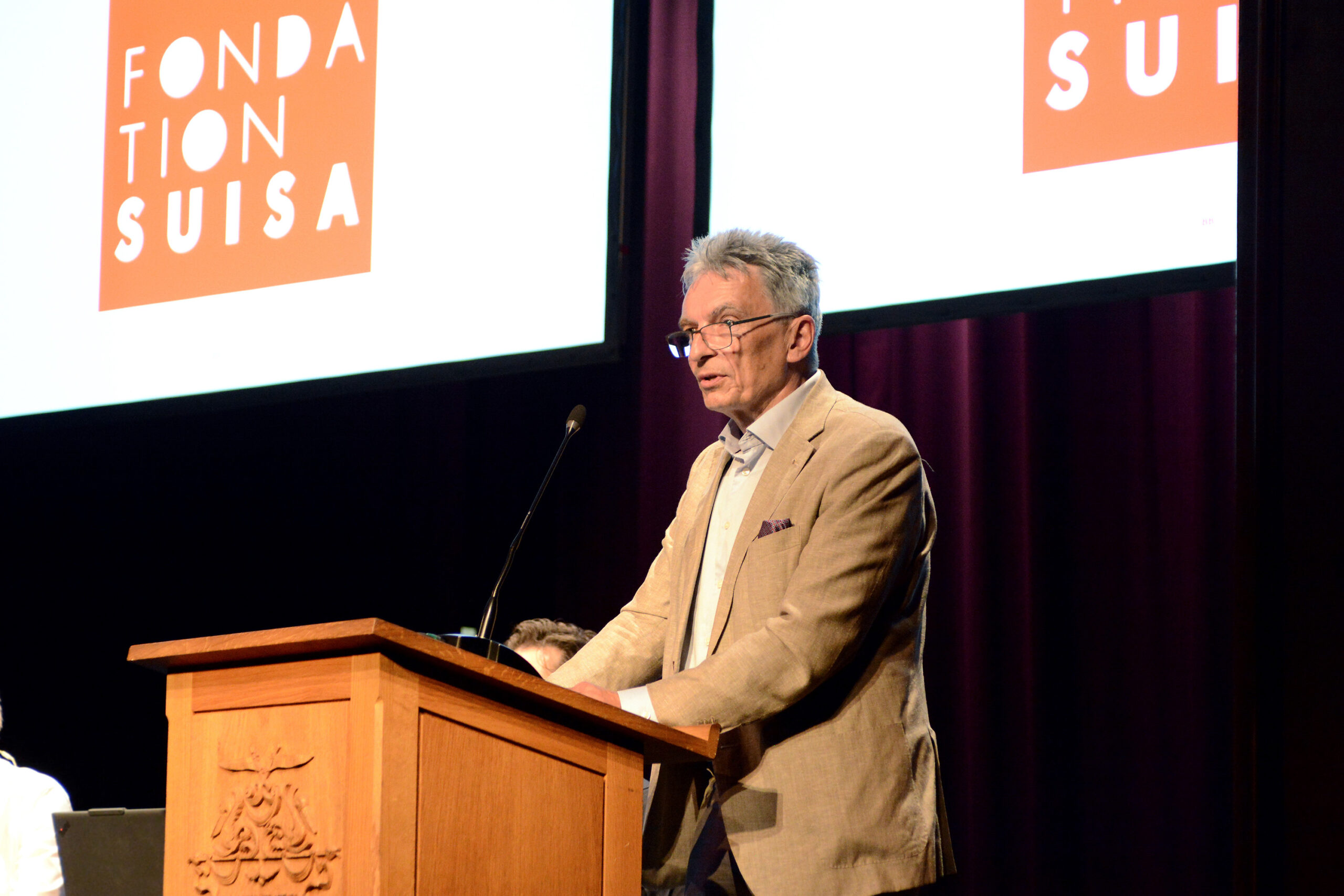
Urs Schnell: One of the most important achievements was consolidating Fondation SUISA as a reliable and authoritative partner, both in the musical landscape and in Switzerland’s cultural policy. Thanks to our sound and stable organisation, we managed to secure the continuity of our activities and make an effective impact: today, many other institutions look to our work as a reference, and benchmark their positions against ours. I am especially proud of “Get Going!”, the support programme that we managed to implement – starting in 2018 – outside conventional cultural funding practice which is usually geared to the end product. “Get Going!” on the other hand was directed at the process of musical creation, involved greater risk and pursued an open-ended approach in terms of results. We thus fostered avenues for growth and research which would probably never have been developed within the confines of a conventional project. Knowing that this model has been at least partially adopted by other institutions gives me great satisfaction.
Is there anything you would have liked to achieve but did not manage to bring to fruition?
Generally speaking, I would have liked to launch an in-depth reflection on a re-thinking of the music and culture support system. The pandemic starkly exposed both the fragility and limits of existing funding systems and the lack of co-ordination between public and private entities working in the same sphere.
Unfortunately, once the emergency was over, people quickly reverted to the same logic as before without any systemic review. Those past lessons did not trigger structural changes, and the negative effects of certain mechanisms are becoming increasingly evident today, including in economic terms.
With specific regard to contents, on the other hand, I would have liked to devote more time to Switzerland’s musical heritage. We made some achievement with the rediscovery of the works of Joseph Lauber, Robert Oboussier and other extraordinary composers. Our purpose was not merely to restore the archives but to bring this music back to concert life, recognising it as living cultural heritage and a source of inspiration for contemporary musical creation. However, these achievements owe more to the passion and dedication of single individuals than to any co-ordinated strategy.
What are your hopes for the future of FONDATION SUISA?
I think FONDATION SUISA will inevitably have to set its own priorities with greater accuracy. Paradoxically, what for years was our greatest strength, i.e. supporting musical creation in its broadest variety, without distinction of genre or style, now risks becoming a limit. We are receiving more and more funding requests, and are the target of increasingly diverse, not to say conflicting, expectations. Under the circumstances, it is ever more difficult to define strategic priorities and make a truly significant impact. Some fifteen years ago, for example, we were pioneers in recognising film music as a strategic development target. Today it would be merely one among many themes to be addressed. I truly hope, therefore, that rather than all following the same aims, cultural promotion institutions manage to diversify the forms of cooperation and co-ordination, and develop complementary instead of overlapping strategies.
Outlook with Fabio Baechtold
What is the biggest challenge in going from an activity focused on a single genre – like jazz in your previous work for BeJazz and Suisse Diagonales – to a role encompassing the entire spectrum of Swiss musical creation?
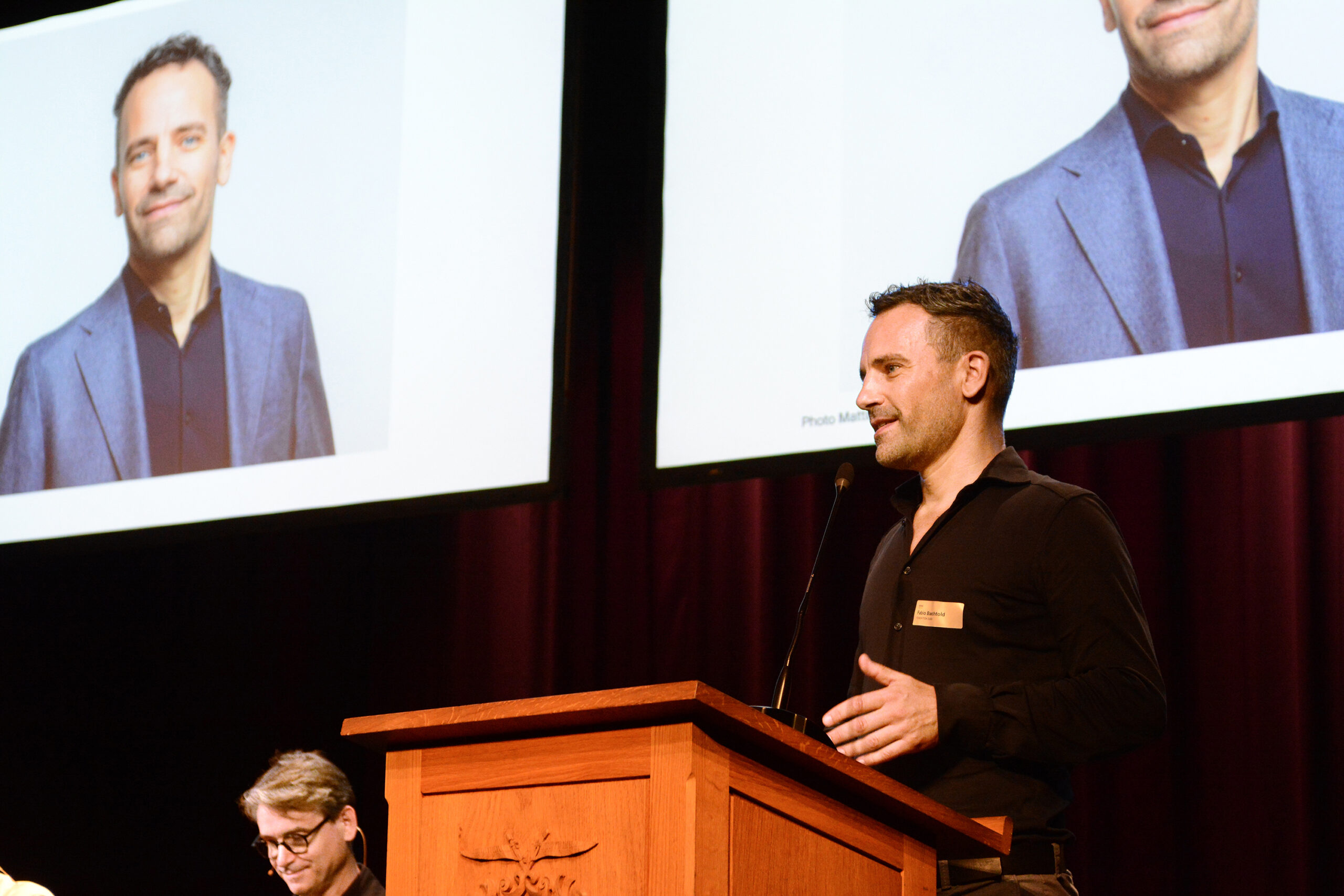
Fabio Baechtold: When you fully master a genre, you instinctively recognise the truly significant projects and artists. It will no doubt take me more time to do so in fields I know less well. However, the experience I garnered with the Music Commission of the City of Bern taught me that you can adjust to new contexts much faster than you think. My views on contemporary music and pop music have often coincided with those of the experts, and this experience gives me confidence.
And with regard to the assessment of funding requests, I can also rely on the competencies of the FONDATION SUISA Artistic Committee. I see my role more as maintaining an overview, defining strategic guidelines, and developing new approaches. And it may actually be an advantage in this respect to see things from an external perspective.
Looking to the future, what do you think will be the main challenges for Swiss musical creation?
The number of funding requests received by cultural funding institutions is rising constantly as is the number of applications to concert organisers. At the same time, certain – so far less well-structured – sectors are rightly demanding more adequate compensation. All this means that we shall have to define our priorities and intervention profile even more clearly, otherwise the system may no longer be sustainable. Swiss musicians, moreover, have to cope with a structural problem, namely the limited size of their domestic market. With the decline of the record industry, concerts have become an even more important source of income. But the opportunities to perform in Switzerland are inevitably limited and, when you come from a small fragmented country like ours, making an international break-through is a huge challenge.
What do you like most about working with music and in close contact with artists?
Musicians are profoundly creative individuals; this is not a routine job. Working in so passionate an environment is a constant source of motivation. Moreover, the feedback is always immediate: you understand right away what works and what needs to be improved instead.
Many people think that artists – and musicians in particular – are not normal people. Is that true?
Many artists choose to live without any proper safety nets, because they experience their art as an essential need. This is certainly a trait peculiar to their work, but I wouldn’t call it ‘abnormal’ at all. I believe real life is far richer and more variegated than the stereotypes. If there is one feature common to cultural workers, it may be precisely the extraordinary diversity of personalities and life stories. And that is what makes working with them so stimulating.